
Recognizing the difference in between a judgment and a lien is challenging for lending institutions, borrowers, legal assistants buying a lien search, and the general public, who are often confused.
A judgment is an official decision made by a court concerning the rights and liabilities of celebrations in a legal instance. On the other hand, a lien is a lawful claim or right versus a building to secure the payment of a financial debt or commitment. A lien can result from a judgment but can likewise arise from independent consensual contracts such as car loans or other economic contracts.
What is a judgment?
Investopedia discusses this quite merely:
Judgment is a court decision, spelled out in a court order, that adjudicates (makes a formal judgment or choice) a conflict between 2 parties by identifying the rights and responsibilities of each party. A judgment may require financial settlement or transfer of residential property from one celebration to one more. Judgments can likewise have non-monetary demands, such as instructing one event to execute a solution for the other.
The court system includes different degrees: trial, appellate, and Supreme Court. In these courts, proof is presented, and decisions are made by courts or courts called judgments. Judgments may cause economic or non-financial implications for a debtor to make the lender whole, and allures can be made on these judgments.Read about Judgment Lien Certificate Connecticut details At website
What Is a judgment lien?
A judgment lien is a court ruling that enables one event to acquire one more’s property, usually in contentment of a debt or similar obligation. A judgment lien makes it possible for the financial institution to take control of the debtor’s real or personal property, such as residences, lorries, or other personal effects.
Exactly how judgment liens function
If you owe cash to a financial institution and don’t pay, they might sue you for the equilibrium. If the court rules against you, the creditor can file a judgment lien versus you. A judgment lien is thought about nonconsensual because it is affixed to an item of property without the owner’s consent or contract.
A plaintiff that gets a judgment is referred to as a judgment lender, while the offender comes to be a judgment debtor.
The judgment lender should record the lien in a lot of states through a region or state declaring. In a few states, if a court enters a judgment against a debtor, a lien is immediately created on any realty the debtor owns because county.
Once a judgment lien is filed with the appropriate authority, it ends up being connected to the debtor’s personal or real estate. Personal effects refers to properties such as cars, home appliances, or furniture, while real property refers to things like homes and various other structures or land.
What is a lien?
A lien is a lawful case that provides a lender or loan provider the right to your residential or commercial property or properties if you stop working to settle a financial debt. If you’re a home owner with a home mortgage, you’re likely acquainted with a lien due to the fact that you have one on your building up until you repay your mortgage.
Liens are made use of as a backup to aid safeguard lenders’ investments and as a treatment for financial institutions to collect unsatisfied financial debts. When you use collateral for a funding, the lender must guarantee that it can take the residential property to recover its loss if you default on your financial debt. (experian.com)
What types of liens are typical for a due persistance search?
The due diligence search involves extensively identifying, reviewing, and validating all offered info on an individual, firm, or entity. A due persistance check is vital when hiring or thinking about possible organization companions or new industrial connections. A lien search is the primary part of a due diligence search. Frequently asked for by a lending institution or their lawyer, lien searches can be composed of any or all these types of liens:
Real Estate Lien
A property lien provides a lender the right to confiscate and sell property residential or commercial property if a person defaults on an arrangement. Home loans are commonly realty liens and are an example of a voluntary lien you agree to when you obtain money to purchase a home.
Added liens can be put against your real estate, which can be voluntary and uncontrolled. If you secure a bank loan on your home or utilize your home equity as security for another lending, a 2nd (or 3rd) lien would certainly be videotaped versus that residential property. In this instance, the lienholders (the creditors) would certainly be given top priority based on when the lien was submitted. Lien top priority comes into play when you sell your home and determines who makes money first if the residential property is ever before sold off or foreclosed.
Bank Lien
A financial institution lien is a lien that offers a bank a lawful right to possessions you promise as collateral for a debt or financing, such as a home, cars and truck, or personal lending. As such, the financial institution can seize the collateral and sell it to redeem its loss if you back-pedal a financial obligation.
Tax Lien
A tax lien is an involuntary lien put on your home if you fail to pay state or government taxes. Tax obligation liens are provided top priority over all other liens, which implies they should be paid initially. Federal and state tax liens can be put on possessions, consisting of personal property. When left unpaid for prolonged periods, tax obligation liens could lead to the forced sale of your residential property, at this time, all or some of the extra lienholders would be paid what they are owed from the sale proceeds.
Judgment Lien
A judgment lien is placed on your residential or commercial property or assets by a court that develops you have an arrearage. Financial institutions that prove you back-pedaled an arrangement and owe them money can submit judgment liens in local courts. Similar to other liens, the lienholders will be paid from the sale continues if your building is offered.
Mechanic or Construction Lien
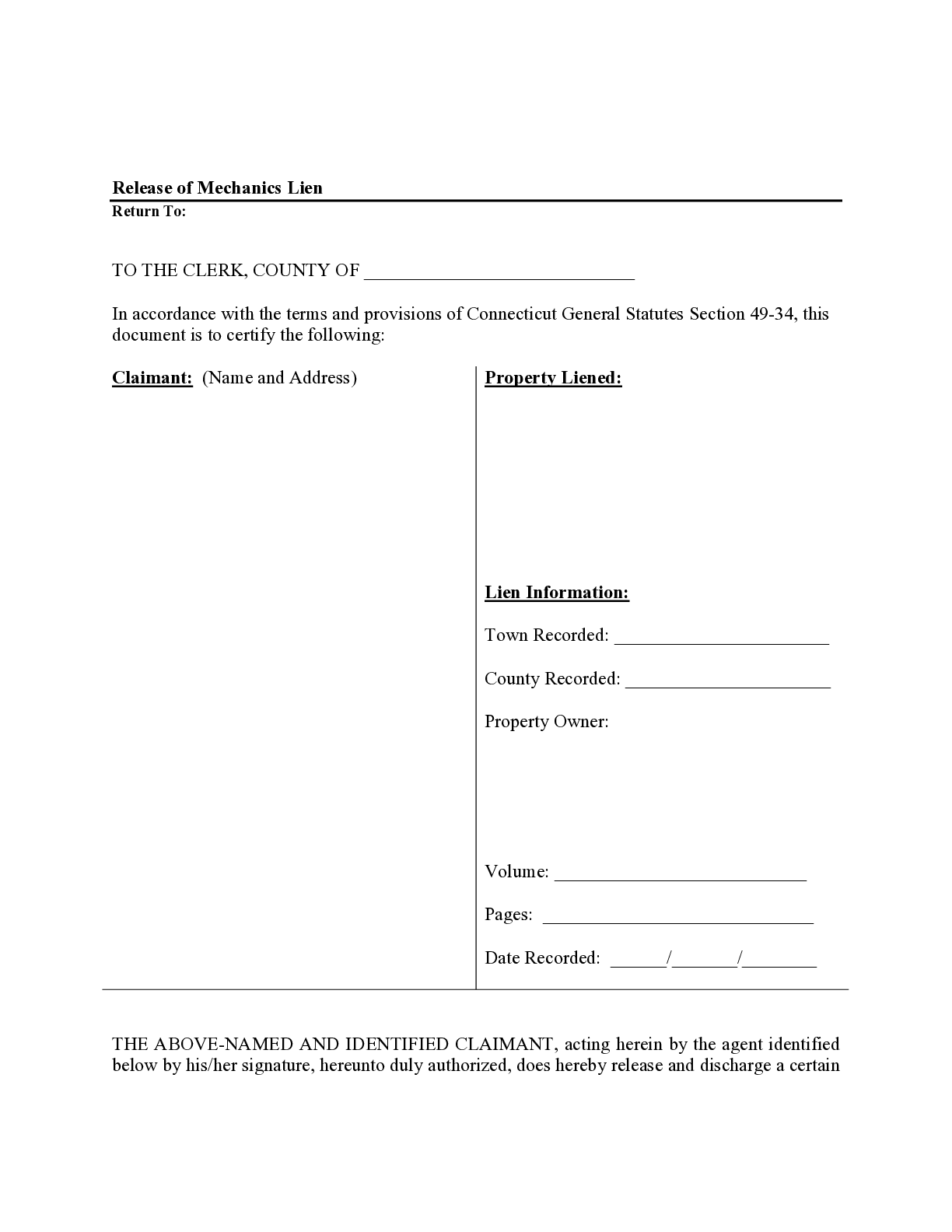
Liens of this kind must be submitted with court and are positioned against real estate for which a professional or subcontractor has performed job and was not paid by the property owner. A building and construction or technician’s lien can just be positioned on the residential or commercial property the creditor serviced.
Kid Assistance Lien
A lot of states allow liens to be placed on a parent’s building when they stop working to pay court-ordered kid assistance. These liens can be attached to real estate, automobiles, savings account, and various other important assets.
Let’s not fail to remember the UCC Lien!
A UCC search gives a listing from the general public record of UCC Financing Statements submitted by financial institutions to best their safety and security interests by giving notice to the public.
When a UCC search is requested, the function is to reveal a possible list of these creditors/lessors and to check out the security and properties formerly assured, hence creating the lien.
Enjoyable Fact: Which is proper, ‘judgement’ or ‘judgment’?
We are asked this question constantly! According to Scribbr, Judgment and reasoning are two various punctuations of the noun for the act of developing a point of view, the capability to create an opinion, and the point of view itself. It also describes a formal legal choice made by a court. The punctuation varies based upon whether you’re composing UK or United States English.
- In United States English, “judgment”
- -RRB- is the “only correct punctuation.” In UK English “judgement” (with an “e”-RRB- is standard, but “judgment” is made use of in lawful contexts. While judgement is the common punctuation in the majority of contexts in UK English, judgment is used rather in legal contexts. Various style guides, consisting of Oxford Style, recommend this use.
Are you still feeling a little overwhelmed?
It’s not a trouble; we can help. Call us and allow us handle your requests or large jobs, including lien searches and corporate retrieval. We will provide updates on your requests, comprehensive billing, and turnaround time details so you can focus on what you do best.