
This strategy can save a significant amount of time, as it shifts the focus to the areas of the company’s financials that need the most attention. This isn’t about hiding information or presenting an unrealistic picture; it’s quite the opposite. It’s about allowing executives and decision makers to drill down to the vital information quickly—without needing to sift through hundreds of pages of financial data. Taking a look at this example, we can see how well it provides a snapshot of the business. While there was a big increase in revenue across the company as a whole in 2023, the majority of this has come from the Asian region.
Vertical Analysis on the Statement of Cash Flows
Vertical https://www.univ-bouira.dz/vrre/?p=13236 analysis converts each financial statement line item into a percentage of a key total, typically setting that total at 100%. On an income statement, each expense is shown as a percentage of total sales, helping identify cost drivers. Vertical analysis provides a structural snapshot of a company’s financials at a single point in time, while horizontal analysis highlights trends acrossperiods.

Purpose of Vertical Analysis
When it comes to managing your finances, having a clear understanding of how your money is being allocated and utilized is crucial. In this article, we will explore the definition, working principles, and provide an example of vertical analysis to help you optimize your financial strategies. Vertical Analysis can be complemented with tools like Horizontal Analysis, Ratio Analysis, and Trend Analysis to provide a more comprehensive understanding of a companys financial health and performance. To perform a proportional analysis, each cash flow item is divided by the total cash inflows or outflows, then multiplied by 100 to get a percentage.

Rates of Return and Profitability Analysis
In 2026, businesses have a unique opportunity to leverage advancements in AI to their advantage. My Accounting Course is a world-class educational resource developed by experts to simplify accounting, finance, & investment analysis topics, so students and professionals can learn and propel their careers. Furthermore, the growing depletion of groundwater and changing climatic conditions have vertical analysis urged traditional growers to adopt alternative farming methods. Increasing consumer concerns about health and the abovementioned factors are likely to elevate industry demand. Market entry strategies should focus on partnerships with logistics companies, tailored solutions for niche industries, and enhancing customer service support.
Navigating Conveyor Belt Cleaner System Market Growth: 4.1% CAGR and Key Trends by 2033
- The process involves selecting a base figure, typically total assets for balance sheets, and converting every other item into a percentage of this base in companies.
- For example, a business may compare sales from their current year to sales from the prior year.
- Vertical analysis not only makes it easier to understand the financial statement but also enables meaningful comparisons between companies in different industries and over time (Brealey et al., 2017).
- Starting from the revenue line item, each line item on the income statement – if deemed appropriate – is divided by revenue (or the applicable core metric).
- It focuses on proportions, not just raw numbers, offering a clearer picture of a company’s performance relative to its peers.
Their capabilities continue to advance, incorporating features such as night vision, motion sensing, and facial recognition. Monitors serve to observe real-time feeds from surveillance cameras, usually stationed in control rooms or dedicated monitoring areas. Moreover, storage devices are essential in archiving recorded footage captured by surveillance cameras, facilitating applications like crime investigation and suspect identification.

Key Differences Between Horizontal and Vertical Analysis
Common size income statement refers to an income statement where each line item is expressed as https://www.bookstime.com/ a percentage of total revenue. For example, irevenue was Rs. 100 crores, cost of goods sold was Rs. 60 crores, and operating expenses were Rs. 20 crores, then common size income statement would show as below. By analyzing common-size financial statements, business owners can make informed decisions about pricing, cost control, capital allocation, and debt management. This can lead to improved profitability, stronger financial health, and sustainable growth. A decreasing percentage of administrative expenses relative to revenue could suggest improved cost management. Analyzing these percentages in comparison to prior periods or industry benchmarks provides invaluable insights into a company’s financial performance and position.
- Ensuring data accuracy is crucial to minimize errors and maintain credibility with stakeholders.
- Each of these statements provides crucial insights into different aspects of a company’s financial health.
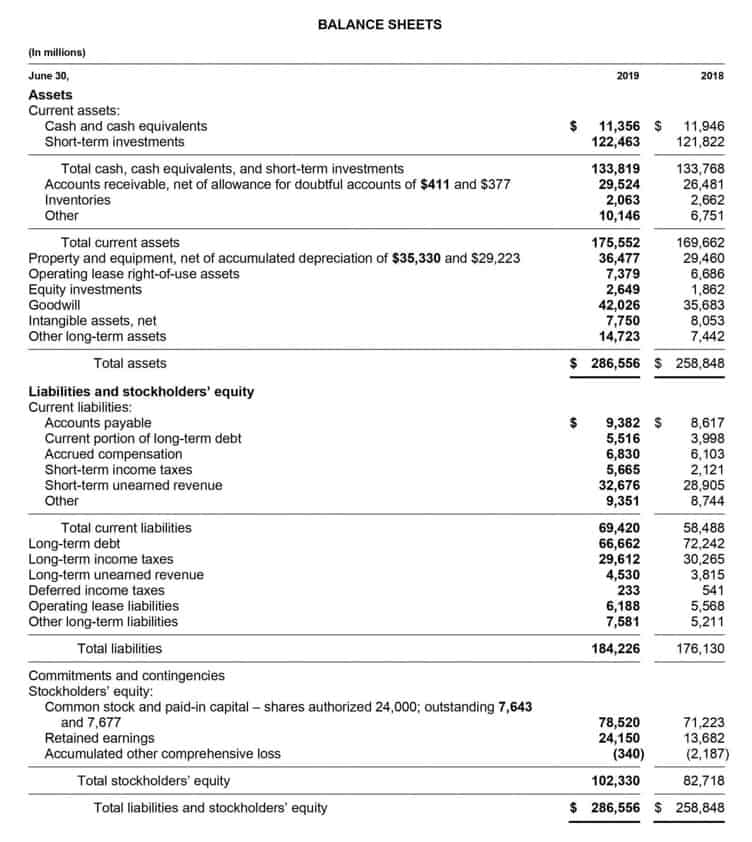
- To perform vertical analysis on a balance sheet, investors first calculate each line item as a percentage of total assets or liabilities.
- A Common-Size Income Statement is a financial statement where each line item is expressed as a percentage of total revenue.
- Vertical analysis is often compared to horizontal analysis, another financial analysis technique.
- This method enhances the ability to perform comparative analysis and make informed financial decisions.
- In my experience using the FundamentalsAnalyzer, this approach—also referred to as common-size analysis—has proveninvaluable for cutting through the noise and focusing on what really matters.
In contrast, the process is practically the same for the balance sheet, but there is the added option of using “Total Liabilities” instead of “Total Assets”. But we’ll utilize the latter here, as that tends to be the more prevalent approach taken.
Automobile Driverless System Market Trends and Forecast: Growth Potential with 5.4% CAGR from 2026 to 2033
By focusing on proportional relationships, vertical analysis helps in understanding the relative significance of each financial statement item. The primary components of financial statements include the income statement, balance sheet, and cash flow statement. In vertical analysis, each line item on the income statement is typically expressed as a percentage of total sales or revenue. This allows for easy comparison of cost structures and profit margins over time or between different businesses. With vertical analysis, one can compare and contrast the financial statements of one company with another, or across various companies.
Next, we will discuss real-life examples and use cases of vertical analysis that illustrate its importance and application in various industries. Compare your results with industry benchmarks or similar companies to see how your business stacks up. For each line item on the balance sheet, divide it by the Total Assets and multiply the result by 100.